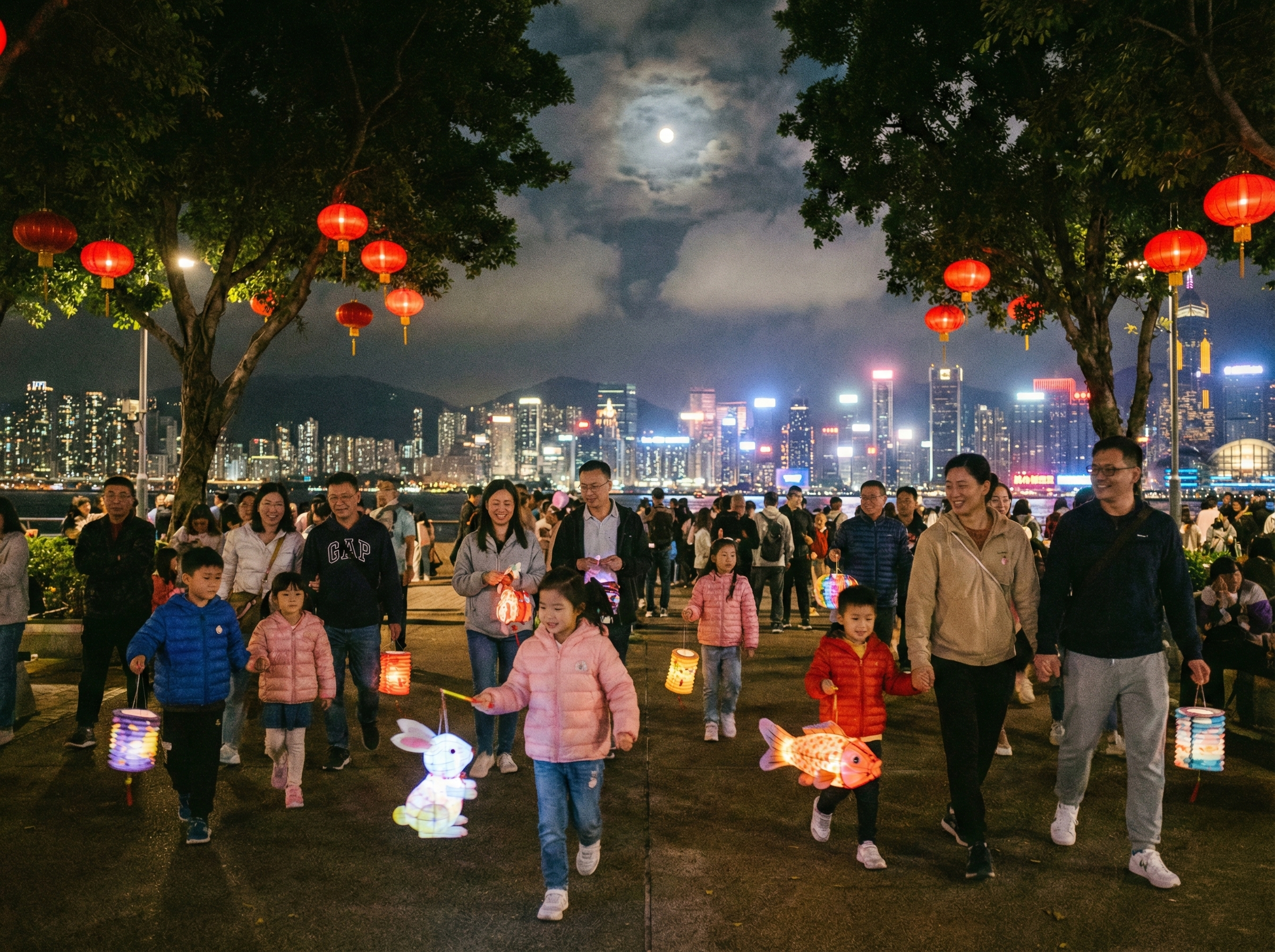
Hong Kong has three official Lunar New Year General Holidays. The calculator includes those holidays in its Hong Kong calendar.
The optional Extended Lunar New Year closure (New Year's Eve to the seventh day) is different. It adds an eight-date planning window for an organisation that closes from Lunar New Year's Eve through Day 7. Select it only when that complete window matches the assumption you need to model.
In the checked 2026 example below, the official holidays produce a result of Thursday 26 February. Adding the extended shutdown changes the result to Tuesday 3 March.
The official calendar has three holidays
The Schedule to the General Holidays Ordinance lists Lunar New Year's Day, Day 2 and Day 3. When one of those days falls on a Sunday, Day 4 replaces it.
The 2026 holidays are three consecutive weekdays, from Tuesday 17 February through Thursday 19 February. In 2027, Day 2 falls on Sunday 7 February, so the gazetted dates are:
- Saturday 6 February: Lunar New Year's Day;
- Monday 8 February: Day 3; and
- Tuesday 9 February: Day 4, replacing Day 2.
These General Holidays provide the official calendar for a Hong Kong working-day count. A private office, factory, site or supplier may use a longer closure, but that closure comes from its own arrangements.
The optional shutdown covers eight dates
The Extended Lunar New Year closure (New Year's Eve to the seventh day) starts on the day before Lunar New Year's Day and ends on Day 7. Both endpoints are included, giving eight calendar dates in total.
For 2026, the window runs from Monday 16 February through Monday 23 February:
| Date | Calculator treatment |
|---|---|
| 16 February | Additional shutdown day |
| 17–19 February | General Holidays |
| 20 February | Additional shutdown day |
| 21–22 February | Weekend |
| 23 February | Additional shutdown day |
The preset supplies fixed dates based on Lunar New Year's Day. An organisation may close for a shorter, longer or different period, so use its actual calendar when the eight-date preset does not match.
The two assumptions produce different results
Count 10 working days forward from Monday 9 February 2026. Exclude the start date and include the tenth working day.
With no other exclusion selected, the calculator excludes weekends and the three General Holidays on 17–19 February. The result is Thursday 26 February 2026. The 17 calendar days in the period comprise 10 working days, four weekend days and three General Holidays.
With Extended Lunar New Year closure (New Year's Eve to the seventh day) selected, the calculator also excludes 16, 20 and 23 February. The other five dates in the shutdown window are already excluded as General Holidays or weekend days. The result is Tuesday 3 March 2026.
That count spans 22 calendar days: 10 working days, six weekend days, three General Holidays and three additional shutdown days.
| Assumption | Result | Difference |
|---|---|---|
| General Holidays and weekends only | Thursday 26 February | — |
| Add the Eve-to-Day-7 planning window | Tuesday 3 March | 5 calendar days later |
The second result is five calendar days later, even though the preset adds only three working weekdays to the exclusions. The longer count also includes the weekend of 28 February and 1 March.
The first calculation uses the official Hong Kong calendar. The second also assumes the full organisation-specific closure.
Open the extended-shutdown example in the calculator.
Later Lunar New Year dates have different status
The 2026 and 2027 General Holiday lists have been gazetted. For 2028 through 2030, the Hong Kong Observatory conversion tables identify Lunar New Year's Day, but the annual General Holiday lists are still pending.
| Year | Lunar New Year's Day | Status |
|---|---|---|
| 2026 | Tuesday 17 February | Gazetted; General Holidays are 17–19 February |
| 2027 | Saturday 6 February | Gazetted; General Holidays are 6, 8 and 9 February because Day 2 falls on Sunday |
| 2028 | Wednesday 26 January | Provisional for holiday planning: HKO lunar-calendar date; General Holiday list not yet gazetted |
| 2029 | Tuesday 13 February | Provisional for holiday planning: HKO lunar-calendar date; General Holiday list not yet gazetted |
| 2030 | Sunday 3 February | Provisional for holiday planning: HKO lunar-calendar date; General Holiday list not yet gazetted |
The 2030 date is a Sunday. Under the current substitution rule, Day 4 would be substituted when one of the first three lunar days falls on Sunday. The gazetted 2030 list will confirm the dates that apply.
Match the assumption to the period
The extended shutdown is most useful for operational planning where staff, suppliers or counterparties follow the same closure. A working-day deadline uses the exclusions in its governing document or rule; a voluntary office closure belongs in that count only where the definition adopts it.
Calendar-day periods continue through General Holidays and private closures unless their own rule adjusts the final date. Fixed dates, including MPF contribution dates, follow their published rollover rules.
The working days versus calendar days guide compares these methods. The employment notice, stamp duty and MPF contribution articles explain their particular rules.
Record the selected assumption with the result. For the extended example, a clear record would say:
Ten working days from 9 February 2026; start excluded; Hong Kong General Holidays applied; CNY Eve-to-Day-7 planning window applied; result 3 March 2026.
For the official-calendar comparison, record no other exclusion. A phrase such as "CNY rules applied" leaves unclear whether the calculation used three gazetted holidays or the optional eight-date window.
Sources and verification
Sources checked on 3 August 2026:
- GovHK: General Holidays for 2026 — gazetted 2026 dates and weekdays.
- GovHK: General Holidays for 2027 — gazetted 2027 dates and the Day 2 Sunday substitution.
- Hong Kong e-Legislation: General Holidays Ordinance, Schedule — the three lunar holidays and fourth-day substitution rule.
- Hong Kong Observatory Gregorian–Lunar conversion tables for 2028, 2029 and 2030 — future Lunar New Year planning dates, not gazetted General Holiday lists.
The HKO dates for 2028 to 2030 are calendar-conversion dates for provisional planning. The future gazetted lists will establish the General Holidays.