For a Hong Kong property stamping deadline, first identify the chargeable document and the agreement date that the Stamp Duty Ordinance treats as relevant. Then count the document's calendar period. For an agreement for sale of immovable property, the published period is usually 30 days.
Where the same transaction has a provisional and a formal agreement, use the formal-agreement date only if it supersedes the first-agreement date within 14 days. Otherwise, the first agreement remains relevant. The agreement dates and their legal effect therefore come before the calendar calculation.
Any severe-weather extension applies at the end of the count. The amount of duty and any late-stamping penalty are separate questions.
The official sources, rates and legislation were checked on 3 August 2026.
Identify the document and its time limit
GovHK's stamping table gives the following property-document periods:
| Document | Published time limit |
|---|---|
| Conveyance on sale, including a deed of gift | Within 30 days after execution |
| Agreement for sale of immovable property | Within 30 days after execution, subject to the two-agreement rule below |
| Lease | Within 30 days after execution |
These periods use calendar days. Saturdays, Sundays and General Holidays inside the period remain in the count.
When there are two agreements for sale
Property sales often involve a provisional agreement followed by a formal agreement. GovHK states:
- when the second agreement supersedes the first within 14 days, use the date of the second agreement; and
- otherwise, use the date of the first agreement.
The fact that a later agreement was signed is not enough on its own. The two execution dates and whether the second agreement supersedes the first must be established from the transaction documents.
This 30-day stamping period is separate from the five-working-day first-hand sales period in the Hong Kong conveyancing guide. The five-working-day period concerns execution of the formal agreement. The 30-day period concerns stamping.
Example: use the formal-agreement date
Assume:
- a provisional agreement is signed on Wednesday 28 January 2026;
- a formal agreement supersedes it on Wednesday 4 February 2026, seven days later; and
- no special rule changes the stamping period.
The second agreement supersedes the first well inside the 14 days, so use 4 February as the relevant date. Exclude that date and count 30 calendar days. The result is Friday 6 March 2026.
| Step | Date |
|---|---|
| Provisional agreement | Wednesday 28 January 2026 |
| Formal agreement | Wednesday 4 February 2026 |
| First day after the relevant agreement | Thursday 5 February 2026 |
| Days 13–15 | Lunar New Year General Holidays, 17–19 February, still counted |
| Day 30 | Friday 6 March 2026 |
The calculator reproduces 6 March 2026 with Calendar days selected, 30 days entered and the 4 February start date excluded. The three Lunar New Year General Holidays remain in the count because the period uses calendar days.
Open the 30-calendar-day example in the calculator.
If the formal agreement had not superseded the first within 14 days, the first agreement would generally remain the relevant date and the count would run from 28 January instead. Where the second agreement is signed close to the end of that period, check how the 14 days are counted against the Ordinance before choosing the date — the difference decides which agreement governs.
Apply severe weather only at the end
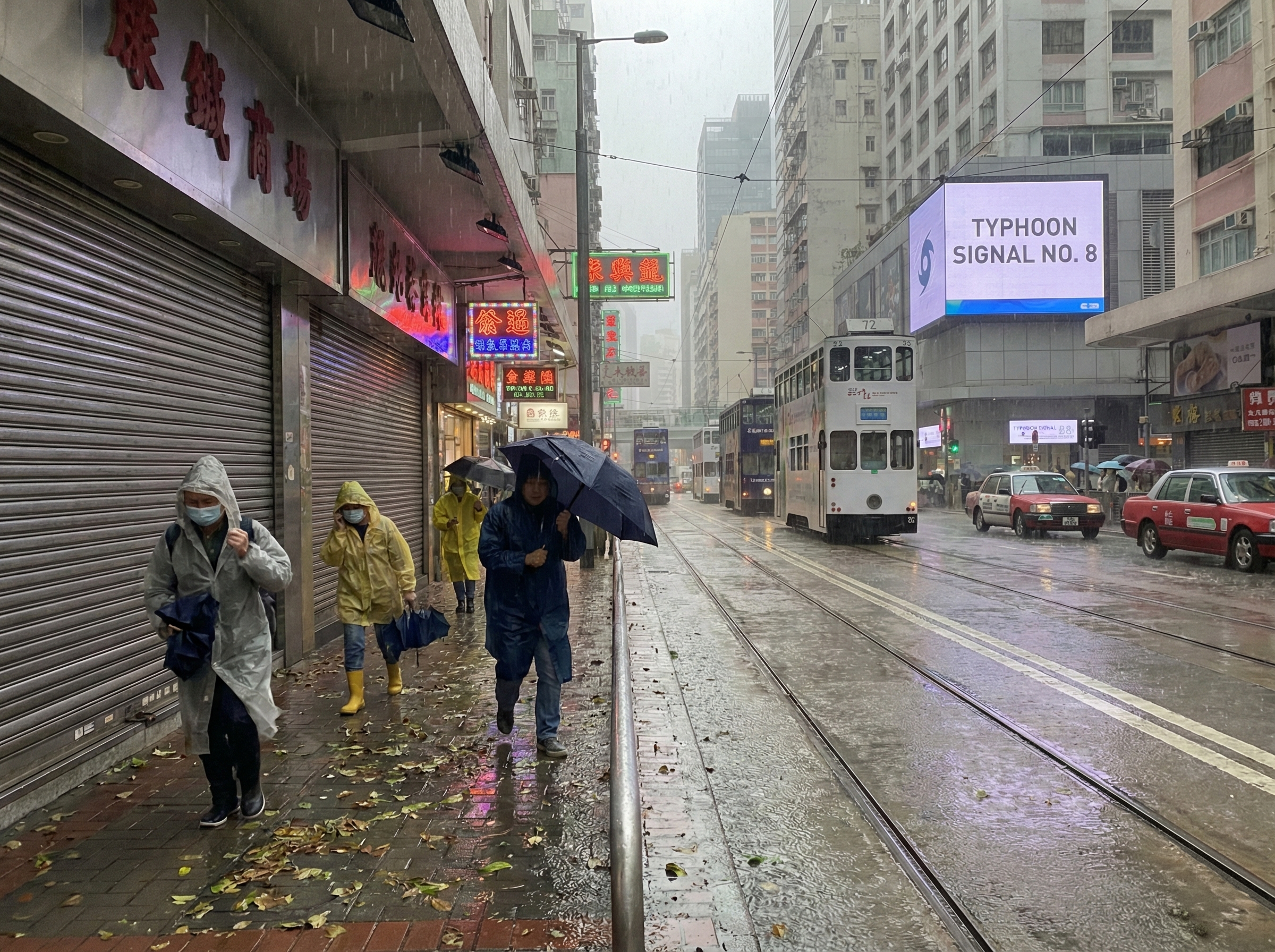
IRD Stamping Circular 02/2024 defines a Severe Weather Day as a day during any part of which Typhoon Signal No. 8 or above is hoisted or a Black Rainstorm Warning is issued. The circular addresses over-the-counter stamping.
For a conveyance, agreement for sale or lease:
- when the last day is a Severe Weather Day, include the next day that is neither a public holiday nor a Severe Weather Day; and
- a Severe Weather Day earlier in the period adds no day to the count.
The calculator shows the unadjusted calendar date. Historical and live warning data must be checked separately, together with the IRD rule, before applying an extension.
Other documents use different periods
The 30-day property rule is not a general period for every chargeable document. The GovHK table also gives:
| Document | Published time limit |
|---|---|
| Contract note for Hong Kong stock where the sale or purchase occurs in Hong Kong | Within 2 days after the sale or purchase |
| Contract note where the sale or purchase occurs outside Hong Kong | Within 30 days after the sale or purchase |
| Instrument transferring Hong Kong stock, other than a gift, executed in Hong Kong | Before execution |
| The same instrument executed outside Hong Kong | Within 30 days after execution |
| Gift of Hong Kong stock executed in Hong Kong | Within 7 days after execution |
| Gift of Hong Kong stock executed outside Hong Kong | Within 30 days after execution |
Identify the document before selecting the number of calendar days. The event that starts the period also differs: some rows refer to execution, while the stock contract-note rows refer to the sale or purchase.
The execution date also fixes which rules apply
Two changes make the execution date matter beyond the counting.
Residential instruments executed on or after 28 February 2024 are no longer subject to Buyer's Stamp Duty or Special Stamp Duty. An instrument executed before that date may still fall under the earlier rules, even where the formal agreement or another later event came afterwards.
Residential rates changed again with effect from 26 February 2026, and a separate Scale 3 applies to non-residential instruments from the same date. Take the rate from the current GovHK rate table for the instrument in question rather than a figure reproduced elsewhere.
Late stamping is penalised by reference to the duty
Missing the deadline matters because the penalty is a multiple of the duty itself, rising with the length of the delay. The Collector may remit a penalty in whole or in part, and applies a published formula to a voluntary disclosure where the delay was not deliberate. Current multiples, the remission formula and its exclusions are on GovHK's late-stamping page.
What the calculator can count
After identifying the document and relevant date, the calculator can add the stated calendar period, keep weekends and General Holidays in the count, and identify the unadjusted result date. For the worked example, the inputs are 4 February 2026, 30 calendar days and an excluded start date.
Check the transaction documents and official material for the remaining inputs: which agreement is relevant, which rate applies, whether severe weather extends the final day and whether the Collector remits a penalty.
Sources and verification
Sources checked on 3 August 2026:
- GovHK: Time limit for stamping — document-specific periods, the two-agreement rule and residential-property deferment history.
- GovHK: Late stamping and omission to stamp — penalty tiers and the voluntary-disclosure remission formula.
- GovHK: Stamp duty rates — current residential and non-residential AVD tables.
- IRD: Demand-side management measures — the effect of the 2024 changes on BSD, SSD and residential AVD.
- IRD: Stamping Circular 02/2024 — over-the-counter severe-weather treatment.
- IRD: 2026 stamp-duty amendment press release — enactment and effective date of the 6.5% top residential rate.
- Hong Kong e-Legislation: Stamp Duty Ordinance (Cap. 117) — legislation underlying the published guidance.
Confirm from the transaction documents that the formal agreement is the relevant agreement before using the worked 30-day count.