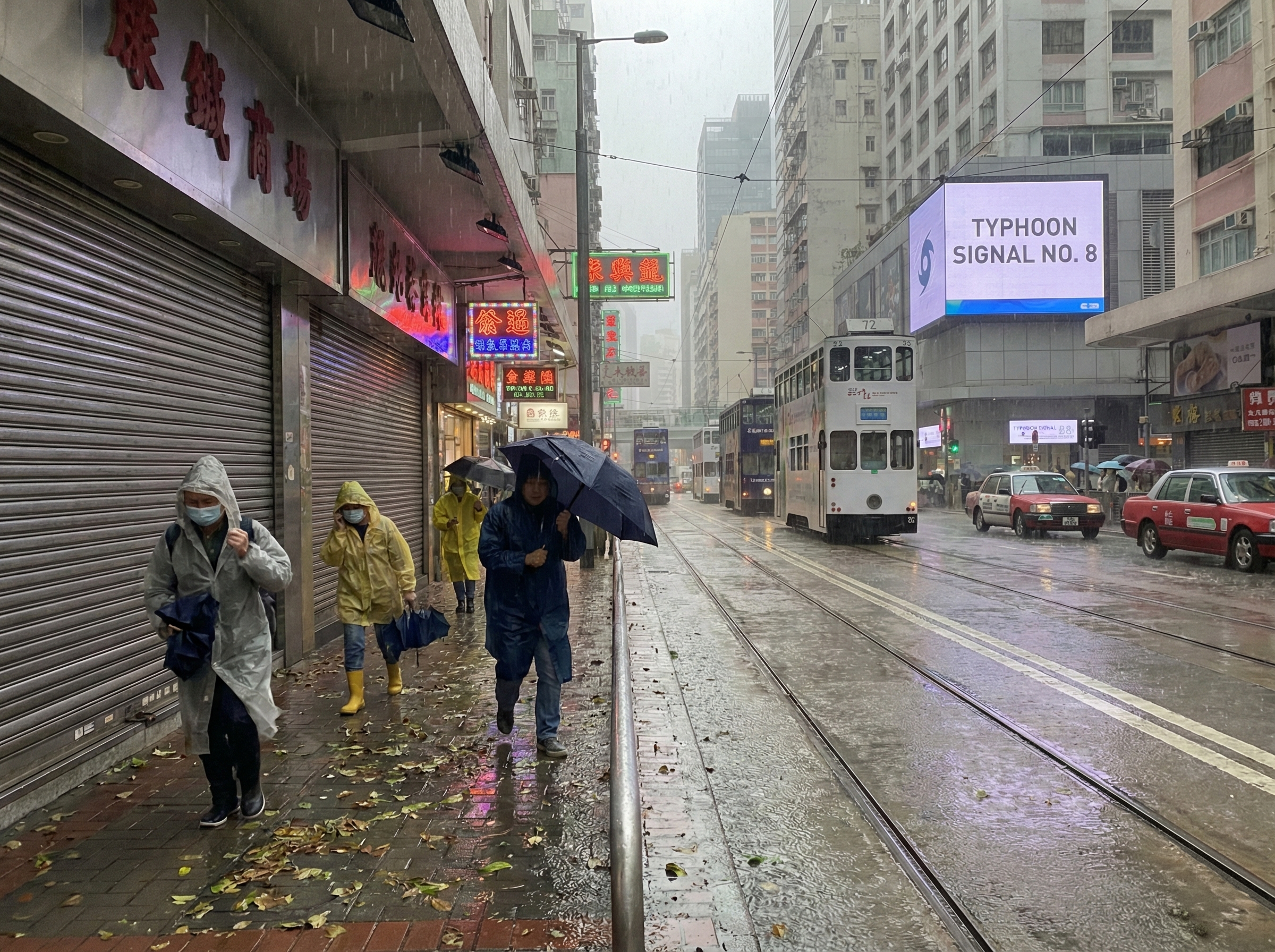
A Typhoon Signal No. 8, Black Rainstorm Warning or Extreme Conditions announcement does not automatically pause or extend a deadline. Its effect comes from the rule or operational arrangement governing the particular step. A warning may adjourn a hearing, close a registry, alter the receipt time of an electronic filing or move a final day. It may leave a calendar-day period unchanged.
Start with the source that sets the period. It may use calendar days, working days, a rule that moves only the final day, or a definition that excludes a warning day wherever it occurs. Court operations and workplace arrangements are separate questions. The arrangements and sources below were checked on 3 August 2026.
Check whether the rule changes the count for severe weather
| Source or activity | What the warning can change |
|---|---|
| Court hearing | The Judiciary's adjournment and resumption arrangements |
| Registry or iCMS filing | Whether the registry is open and when a filing is treated as received |
| Calendar-day period | Nothing, unless the governing source adjusts the final day |
| Working-day definition that names warning days | The warning day can be excluded from the count |
| Employment arrangement | Reporting, release, resumption, wages and safety arrangements; not a universal deadline rule |
The same event can therefore produce different results for a hearing, a court filing and an employment matter. It is not enough to know that a T8 or Black Rainstorm Warning occurred.
Court hearings and registries have different arrangements
The Judiciary publishes separate arrangements for hearings and for registries and offices. A public announcement confirms the response to the particular event. When a Pre-No. 8 Special Announcement is issued between 6:00am and 8:45am, morning hearings are generally adjourned until further notice. When T8 or above is issued, hearings are generally adjourned and registries and offices close.
A Black Rainstorm Warning has a different result depending on when it begins:
| Black Rainstorm Warning issued | Hearings | Registries and offices |
|---|---|---|
| Before opening time | Generally adjourned | Closed |
| During office hours | Generally adjourned | Remain open |
For a T8, Black Rainstorm Warning or Extreme Conditions announcement that is lowered, cancelled or ended on a Monday-to-Friday working day, the hearing arrangements are:
| Time | Hearing arrangement |
|---|---|
| At or before 6:00am | Usual morning time |
| After 6:00am and at or before 11:00am | 2:30pm that day |
| After 11:00am | Adjourned for the day; attendance at 9:30am on the next working day |
Registry reopening uses a different timetable. If the signal is lowered or cancelled at or before 6:00am, registries and offices open as usual. After 6:00am, they generally aim to reopen at the usual morning time or within two hours, subject to conditions. They remain closed if the event ends two hours or less before their normal closing time. Check the Judiciary announcement rather than applying the 2:30pm hearing time to a registry.
iCMS receipt depends on the registry reopening
Electronic submission does not make a closed registry open. A document filed through the integrated Court Case Management System (iCMS) during a registry closure is deemed received when that registry reopens. The submission acknowledgement records the submission time; it may not be the official receipt time. Check the Judiciary announcement and registry record for the reopening and receipt times.
A day off work is not automatically a non-working day
The Labour Department's Code of Practice asks employers and employees to agree work arrangements in advance, including reporting for duty, release, work resumption, remote work, wages and allowances. For general staff, it says employers should not require attendance at the workplace when T8 or above, a Black Rainstorm Warning or Extreme Conditions are in force before working hours.
A day on which staff are told not to report is still an ordinary day for a contract, court rule or statutory deadline unless that source says otherwise. The two questions are decided separately, and the Code of Practice covers the employment side, including wages, leave and workplace safety.
Different deadlines can use different weather rules
| Deadline or activity | Weather treatment |
|---|---|
| Employment notice stated in months | Calendar-month count continues; T8 does not create another month-counting rule |
| Property stamping | Calendar days continue; the IRD circular extends only the final day in the circumstances it specifies |
| MPF contribution or enrolment | Use the MPFA's published final-day rollover conditions |
| Conveyancing working day | Use the statutory or contractual definition; the calculator has no historical warning record |
| Court filing | Apply the relevant court rule, Registry status and iCMS receipt arrangement |
These comparisons show why the wording of the source matters more than the name of the weather event.
Example: a scheduled baseline and a hypothetical T8 day
Assume a document is served on Monday 20 July 2026. The governing rule requires five working days, excludes the trigger date, Saturdays and Sundays, and also excludes any T8 day covered by that rule.
With scheduled weekends and General Holidays only, the calculator gives:
| Count | Date |
|---|---|
| Day 1 | Tuesday 21 July |
| Day 2 | Wednesday 22 July |
| Day 3 | Thursday 23 July |
| Day 4 | Friday 24 July |
| Weekend | Saturday 25 and Sunday 26 July — excluded |
| Day 5 | Monday 27 July |
The scheduled baseline is Monday 27 July 2026. Now assume, purely as a hypothetical, that T8 was in force on Thursday 23 July and that the governing rule excludes that day. The fifth working day would then be Tuesday 28 July. Check the actual warning records and add any qualifying day as an exclusion; warning events are not part of the holiday data.
This example does not say that T8 occurred on 23 July 2026. It shows the extra step required where the definition of a working day includes warning days.
Open the scheduled baseline in the calculator.
Use the calculator for the scheduled part of the count
The calculator can count scheduled weekdays, weekends and gazetted General Holidays, then show the dates excluded from that baseline. It can also apply the selected calendar-day or working-day method.
Actual warning events, registry hours and iCMS receipt times must come from the relevant official records. The governing rule or contract must state whether a warning day is excluded. Workplace, wage and compensation questions depend on the employment arrangements and applicable law.
For the general distinction between calendar days, working days and boundaries, see Working Days vs Calendar Days in Hong Kong.
Sources
Sources checked on 3 August 2026:
- Hong Kong Judiciary: Typhoon and Rainstorm Warning Arrangements, hearings, registry closure and reopening, Extreme Conditions, and iCMS deemed receipt
- Hong Kong Judiciary: iCMS case-document submission, submission and receipt times during registry closure
- Labour Department: Work Arrangements in Times of Adverse Weather and Extreme Conditions, the current guidance page and Code of Practice
- Labour Department: Code of Practice, workplace guidance and statutory duties on leave, wages, safety and employees' compensation
- Hong Kong Observatory: Tropical Cyclone Warning System, official warning-system information
- IRD: Stamping Circular 02/2024, document-specific severe-weather treatment for over-the-counter stamping
- MPFA: Contribution Days Calendar, MPF rollover conditions